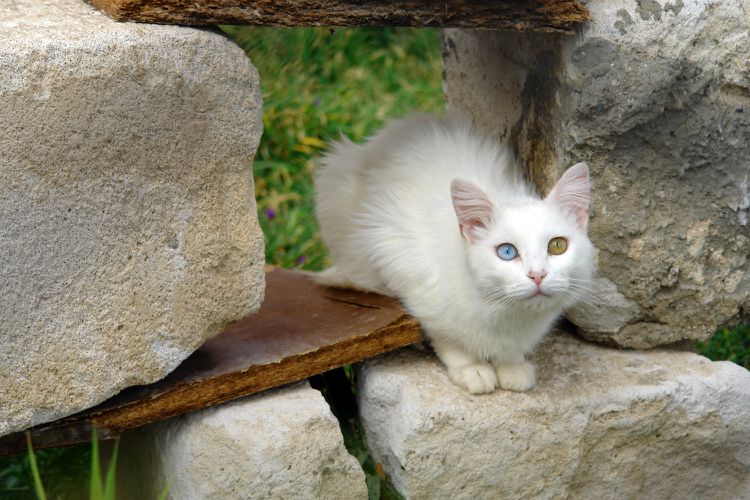
The Turkish van is a rugged, large-bodied cat that originated in the Middle East. It is all-white with colored markings on the face and tail only. This type of color pattern is so distinctive that when it appears in other cat breeds it is often called a “van” pattern.
These active and athletic felines love to climb, jump and explore. Although they might curl up with you for the occasional cuddle, Turkish vans are more likely to be found roaming the house and following you from room to room, looking for adventure.
One unique characteristic of the Turkish van cat is its love of water. The Turkish van is often called the “swimming cat.”
Personality: Affectionate, energetic, adventurous, and playful
Weight: Up to 20 pounds
Length: Up to 30 inches
Coat Length: Medium-length hair
Coat Colors: White with colored markings on the head and tail (red, black, blue, tabby, tortoiseshell, or any other color other than Himalayan pattern and colors)
Coat Patterns: Bicolor
Eye Color: Amber, blue, or odd-eyed (each eye a different color)
Lifespan: Up to 17 years
Hypoallergenic: No
Origin: Middle East
Turkish van cats have friendly, outgoing, and affectionate personalities, especially with their beloved human family members. Because of their even-keeled temperament, they tend to get along well with other cats, dogs, and respectful kids.
These large, mostly white cats are not fully grown until they are three to five years old. They are born with their "van" coloration, appearing on their ears/head and tail, and their coats are silky and medium length.
The Turkish van is an ancient breed that’s rare even in its native place of origin. It developed naturally in the region of central and southwest Asia (the present-day countries of Iran, Iraq, and parts of the Soviet Union and Turkey). The breed name comes from the name of a lake and a city in the region, both called Van, and the original cats were simply called “vancats.”
The first Turkish van to leave the region arrived in England in 1955. At first, the breed was referred to simply as the Turkish cat, but due to confusion between the Turkish van and the Turkish angora, the breed name Turkish van was eventually adopted.
The Turkish van was finally introduced in the United States in 1982. The breed is recognized by the Cat Fanciers’ Association and The International Cat Association.
The Turkish van experiences a seasonal heavy shed to reveal its summer coat, which is much shorter to help the cat stay cool in the warm months. You might need to brush your Turkish van more during this shedding period, but throughout the rest of the year, weekly brushing is all that’s needed to keep the coat looking sleek and feeling soft. Thanks to its unique texture, the Turkish van’s coat naturally resists matting.
Turkish van cats love to play, climb and explore. Provide lots of climbing and perching opportunities, and invest in some fun interactive toys like feather wands and puzzle toys. Many Turkish van cats like to retrieve tossed toys like small balls and toy mice.
Unlike many cats, Turkish vans actually like playing and splashing in water, so consider offering some supervised water play opportunities in the sink or bathtub.
The Turkish van is a large cat. The breed is slow to mature, taking an average of three to five years to finish growing and reach their adult weight of up to 20 pounds. In general, the breed is quite healthy and long-lived.
Solid white vans are prone to deafness and are referred to as Turkish vankedisi. They are not considered show quality, and reputable breeders avoid breeding them.
The texture of the Turkish van’s semi-long, soft coat has been likened to cashmere. Because the breed developed in a region that experiences temperature extremes, the Turkish van’s coat changes according to the season.
To keep the cat warm in cold weather, the winter coat is longer and thicker, with tufts of hair often sprouting between the toes. The winter coat also exhibits feathering on the ears, legs, feet, and belly, but the hair on the face remains short. Mature Turkish vans also have a full neck ruff and brush tail.
Although the Turkish van and Turkish angora look similar, they are distinct breeds that developed independently of one another. The Turkish angora is smaller and finer-boned than the Turkish van and comes in more colors and patterns.
Because the Turkish van is already a large cat, it’s especially important not to overfeed. Staying lean is key to preventing health issues. Leaving food out all day (free feeding) can sometimes be tolerated without weight gain because of this breed's high activity level. Consult with your veterinarian or breeder regarding the best food to feed your Turkish van cat.
If you’re thinking about buying a Turkish van kitten, a great place to meet local breeders is a cat show. Cat shows are a fun place to see many different cat breeds all in one place.
Some Turkish van cats or Turkish van mix cats, often adults, might end up in rescue. Check with local cat-specific rescue groups or even local shelters. Or you might find a rescue cat of unknown heritage that looks and acts just like a Turkish van.
Note that breeders generally keep kittens with the mother until 12 to 16 weeks of age, at which time they are ready to go home to their new families.
The Turkish van is an excellent cat for active families that enjoy interacting with their pets. This large, silken-haired feline is generally ready for fun and even enjoys swimming or playing in water. While it isn't likely to cuddle up in your lap for long, the van is an affectionate companion who doesn't mind being petted and picked up on occasion. The van's medium-length hair requires minimal brushing except during the spring shed, and this generally healthy cat is not predisposed to any major health issues.
Affectionate and friendly
Playful and engaging
Gets along well with other pets
Generally not a lap cat
Moderate shedding
Doesn’t do well if left alone for long periods of time
If you’re interested in similar breeds, check out:
Otherwise, check out all of our other cat breed profiles.
Purebred Turkish vans are rare, with only about 100 born in the United States per year. Mixed breeds with Turkish van characteristics are easier to find.
These cats are animated, friendly, and enjoy playing.
All-white vans are prone to deafness, so they are not bred by reputable breeders.

Swollen Lymph Nodes in Dogs
Dogs' lymph node glands may become enlarged due to infection or disease. Learn the causes, treatment, and prevention.
What Is Spaying? All About the Procedure in Dogs
What is a spay? Should you have your dog spayed? Learn what it means to spay a dog, a procedure also known as an ovariohysterectomy.
Can Dogs Eat Popsicles?
You might be wondering can dogs eat popsicles? Certain types of frozen treats are safe for your dog, but you need to be aware of ingredients and allergies
Can Dogs Drink Milk?
Dogs can have milk, providing they are not lactose intolerant. It should really only be given in small quantities though
Can My Dog Eat Tomatoes?
You'll want to keep Fido out of your garden since the tomato plant is toxic, but you can safely offer him ripe tomatoes as a nutrient-packed treat.
Can Dogs Taste Spicy Flavors?
While dogs and humans experience some flavors differently, dogs do taste spicy flavors and in some cases, this can be harmful for them.
Should You Allow Your Indoor Cat to Go Outside?
Here are pros, cons, and safety considerations for allowing indoor cats to explore outdoors and the indoor vs outdoor cats debate, plus safety tips.
Can My Spayed Cat Still Be in Heat?
If your cat was spayed but appears to be in heat, the condition may be caused by several factors. Learn about them here.
How to Keep Cats Cool in Summer
Summertime means heat and with increased temperatures, you have an increased risk of heatstroke in cats. Find out how to prevent heatstroke and keep your cat cool in the summer.
Taurine for Cats
Taurine is an essential animal protein in your cat's diet. Learn more about the various ways it supports your feline's body.
Why Is My Cat Always Hungry and Meowing?
A cat can act like it is always hungry, and there may be a medical reason for this. Learn what behavior is normal and when to see your veterinarian.
Elf Cat: Breed Profile, Characteristics & Care
Elf cats are a new, rare cross between a sphynx and American curl with curly ears and a playful personality.
Maine Coon Cat: Breed Profile, Characteristics & Care
The Maine Coon cat is of the largest cat breeds in the world. These amiable, gentle cats make great companions. Learn about the Maine Coon cat breed's appearance, temperament, health, and care needs.
Calico Cat: Breed Profile, Characteristics & Care
Calico cats boast unique tri-color coats, and they are famous for being both spunky and sweet. Learn about the calico cat color pattern.
Bombay: Cat Breed Profile, Characteristics & Care
The Bombay cat, a mix of the Burmese and the American shorthair, features an all-black coat, a stocky build, and a friendly demeanor.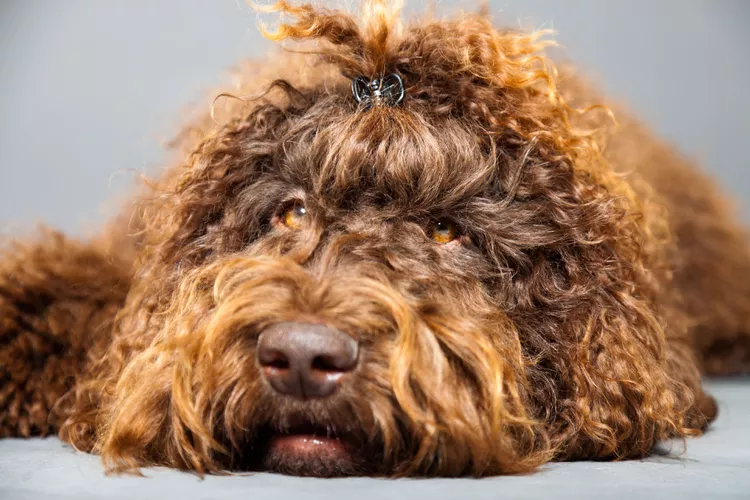
Barbet: Dog Breed Characteristics & Care
Learn about the barbet dog, a French hunting breed that's tough to find in the United States. It's known for its curly coat and calm demeanor.
Bichon Frise: Dog Breed Characteristics & Care
The bichon frise is a fluffy little white dog with a joyful personality. Learn more about its appearance, personality, history, care, and more.
Australian Kelpie: Dog Breed Characteristics & Care
The Australian kelpie is an intelligent, high-energy dog breed developed for herding. Learn about the Australian kelpie, including temperament, appearance, history, and care needs.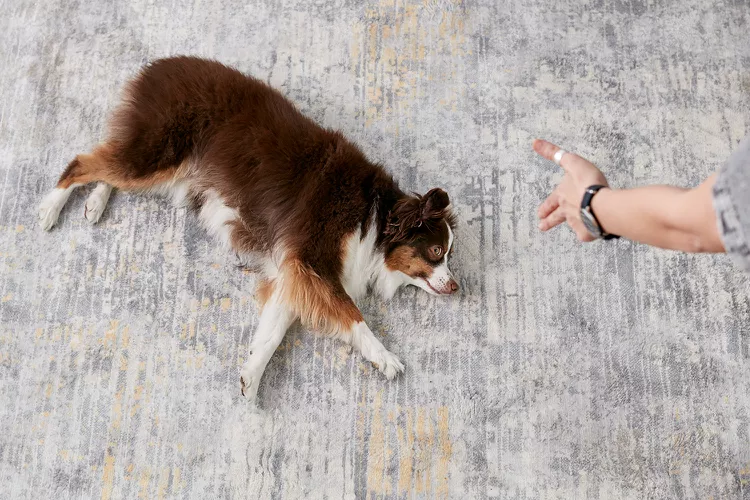
How to Teach Your Dog to Play Dead in 4 Steps
Playing dead is a fun dog trick that most dogs can pick up pretty quickly. Learn simple steps to teach your dog to play dead when you say "bang."
Different Meanings of a Dog's Wagging Tail
A dog wagging his tail is a common sight, but it may mean more than you think. Find out why dogs wag their tails and what canine tail wagging means.


:strip_icc()/weird-cat-behaviors-explained-553972_final2-c766e22821ef485ca88e742fd9ac1cb8.png)