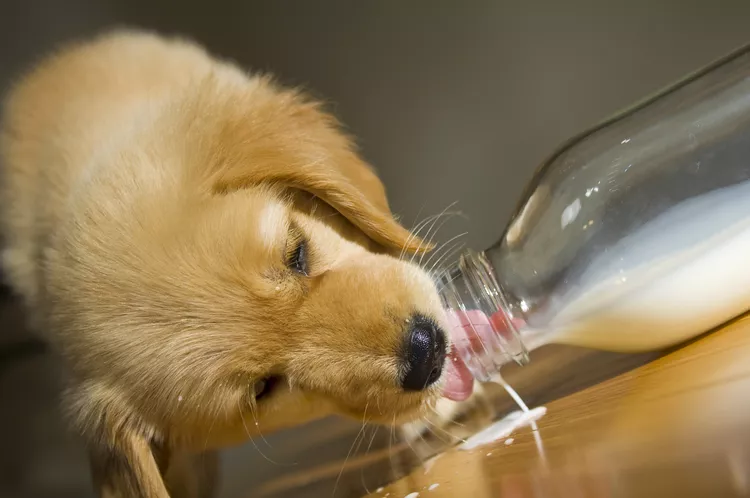
It is not uncommon for owners to ask 'Can Dogs Have Milk?'. The answer is not a simple yes, or no. Milk is not something highly toxic to dogs like grapes, dark chocolate or xylitol. But, if your dog has an intolerance, or is given too much, it can have serious effects.
When puppies have their mother's milk, it is during a time when they have an increased supply of the enzyme called Lactase. This enzyme helps to break down the sugars that are contained in milk, making it easier to digest. Of course, the natural and unprocessed milk the puppies receive is also from their mother, so this is very different from the likes of cows or goat milk.
Once they mature, it is not something they need in their diet. So, if in doubt, it would be best to avoid it, or save for an occasional bit of cheese or lick of ice cream.
As dogs mature and no longer need their mother's milk to thrive, the amount of the Lactase enzyme that they produce naturally decreases. This means that they are not able to break down the sugars in the milk as easily, and they are more likely to develop an intolerance to it.
Of course, not every dog will develop an intolerance, but, like with humans, it is recognized as being a relatively common issue for dogs.
Dogs that suffer from lactose intolerance will usually have an upset stomach. This can result in pain and discomfort, flatulence and diarrhea. Some dogs may also vomit.
The level of the intolerance can vary. Some may only show signs if they are given large quantities of milk, some having been given very little. You should monitor your dog whenever you introduce something new to their diet to allow you to assess if it seems to be causing any problems.
Allergies are less common than intolerances, but, reactions to dairy are one of the more common food allergies seen in dogs. If any reactions happen after eating dairy, you should avoid feeding it altogether and, if the reaction is severe, you should seek veterinary advice.
Aside from the fact that some dogs don't tolerate milk well, it is a food product that is high in fat in its whole form, and when it is in whole dairy products like cheese or cream.
Too much milk or dairy can contribute to obesity problems, and there is the chance that it could contribute to your dog developing a condition called Pancreatitis. This can be a very serious, sometimes even life-threatening, condition that can become a reoccurring problem after the first bout. It can be triggered by too much fat in a dog's diet.
A lot of owners believe that giving their dog additional dairy products as part of their diet will provide them with a good source of calcium. While calcium is important for healthy bone development and other functions, this can be provided by dietary sources that are more appropriate for dogs.
A high-quality, balanced and complete dog food will already contain an appropriate amount of calcium. It is also found in meat, vegetables like broccoli, and even in ground bone. All of these would be better for your dog than regular servings of milk or dairy products.
Don't forget that it is not just milk itself that could cause problems. Dairy products are often given to dogs as a treat or supplement to their diet. Cheese, for example, can be a popular training treat.
If this is chopped into small pieces and only given occasionally, it shouldn't cause any major problems. However, it would probably be better to look for a healthier treat alternative that your dog enjoys just as much.
If your dog does have an intolerance or allergy, you should always double-check the ingredients for anything new you are giving them. Even some commercial dog treats can contain dairy products.
Goat milk is becoming an increasingly popular alternative to cows milk. It has a lower amount of lactose than cows milk. So, in theory, it should be easier for your dog to digest, and it is believed to be less likely to cause an allergic reaction. Again, though, this is something that is not required by your dog and, given the potential for contributing to obesity, it would be best to limit this to small quantities. Don't feed your dog any milk until you have consulted your veterinarian.

Swollen Lymph Nodes in Dogs
Dogs' lymph node glands may become enlarged due to infection or disease. Learn the causes, treatment, and prevention.
What Is Spaying? All About the Procedure in Dogs
What is a spay? Should you have your dog spayed? Learn what it means to spay a dog, a procedure also known as an ovariohysterectomy.
Can Dogs Eat Popsicles?
You might be wondering can dogs eat popsicles? Certain types of frozen treats are safe for your dog, but you need to be aware of ingredients and allergies
Can Dogs Drink Milk?
Dogs can have milk, providing they are not lactose intolerant. It should really only be given in small quantities though
Can My Dog Eat Tomatoes?
You'll want to keep Fido out of your garden since the tomato plant is toxic, but you can safely offer him ripe tomatoes as a nutrient-packed treat.
Can Dogs Taste Spicy Flavors?
While dogs and humans experience some flavors differently, dogs do taste spicy flavors and in some cases, this can be harmful for them.
Should You Allow Your Indoor Cat to Go Outside?
Here are pros, cons, and safety considerations for allowing indoor cats to explore outdoors and the indoor vs outdoor cats debate, plus safety tips.
Can My Spayed Cat Still Be in Heat?
If your cat was spayed but appears to be in heat, the condition may be caused by several factors. Learn about them here.
How to Keep Cats Cool in Summer
Summertime means heat and with increased temperatures, you have an increased risk of heatstroke in cats. Find out how to prevent heatstroke and keep your cat cool in the summer.
Taurine for Cats
Taurine is an essential animal protein in your cat's diet. Learn more about the various ways it supports your feline's body.
Why Is My Cat Always Hungry and Meowing?
A cat can act like it is always hungry, and there may be a medical reason for this. Learn what behavior is normal and when to see your veterinarian.
Elf Cat: Breed Profile, Characteristics & Care
Elf cats are a new, rare cross between a sphynx and American curl with curly ears and a playful personality.
Maine Coon Cat: Breed Profile, Characteristics & Care
The Maine Coon cat is of the largest cat breeds in the world. These amiable, gentle cats make great companions. Learn about the Maine Coon cat breed's appearance, temperament, health, and care needs.
Calico Cat: Breed Profile, Characteristics & Care
Calico cats boast unique tri-color coats, and they are famous for being both spunky and sweet. Learn about the calico cat color pattern.
Bombay: Cat Breed Profile, Characteristics & Care
The Bombay cat, a mix of the Burmese and the American shorthair, features an all-black coat, a stocky build, and a friendly demeanor.
Barbet: Dog Breed Characteristics & Care
Learn about the barbet dog, a French hunting breed that's tough to find in the United States. It's known for its curly coat and calm demeanor.
Bichon Frise: Dog Breed Characteristics & Care
The bichon frise is a fluffy little white dog with a joyful personality. Learn more about its appearance, personality, history, care, and more.
Australian Kelpie: Dog Breed Characteristics & Care
The Australian kelpie is an intelligent, high-energy dog breed developed for herding. Learn about the Australian kelpie, including temperament, appearance, history, and care needs.
How to Teach Your Dog to Play Dead in 4 Steps
Playing dead is a fun dog trick that most dogs can pick up pretty quickly. Learn simple steps to teach your dog to play dead when you say "bang."
Different Meanings of a Dog's Wagging Tail
A dog wagging his tail is a common sight, but it may mean more than you think. Find out why dogs wag their tails and what canine tail wagging means.


