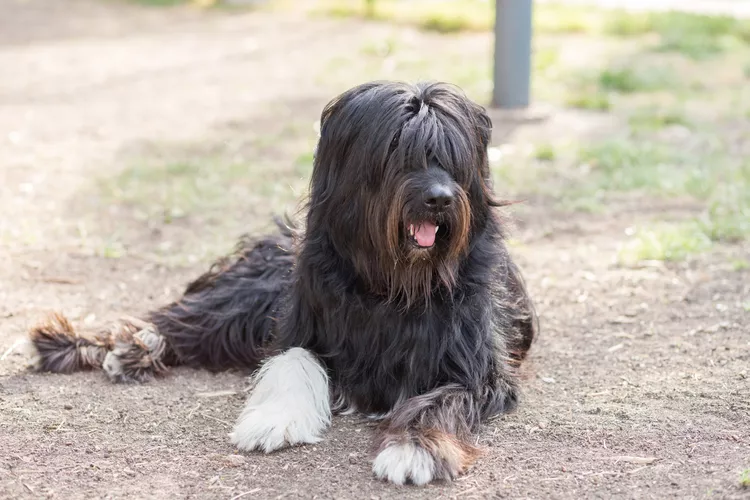
The schapendoes, also known as the Dutch sheepdog, is a medium-size herding dog breed from the Netherlands with a long, thick, slightly wavy double coat that can come in a variety of colors. Overall, the dog has a well-balanced and light build. Its large, round eyes peek out from behind the shaggy fur on its face, which also grows into a mustache and beard. And its downward-hanging ears are fairly small but covered in feathering. The dog’s long tail also has ample feathering. The breed is built for springy movements, which serves it well as a herding dog. And it does best with an active owner.
Group: Herding
Height: 16 to 20 inches
Weight: 26 to 55 pounds
Coat: Long double coat
Coat Color: Beige, black, black and white, brown, gray, gray and white, white, chocolate and white, or tricolored
Life Span: 12 to 15 years
Temperament: Affectionate, bright, attentive
Hypoallergenic: No
Origin: Netherlands
The schapendoes generally has a friendly and upbeat personality. The breed tends to be very devoted to its family, though it can be slightly reserved around strangers. High energy and a playful nature also help to shape the breed's temperament.
The origin of the schapendoes is unclear. The breed is thought to have existed throughout the Netherlands for centuries. It’s likely related to similar breeds, including the bearded collie, puli, Briard, Polish lowland sheepdog, and Bergamasco.
Schapendoezen have been valuable companions for shepherds in the Netherlands due to their strong work ethic and high intelligence. Plus, they were friendly and devoted family companions. The breed nearly disappeared around the time of World War II, but the remaining dogs were gathered to keep it alive.
The schapendoes breed club in the Netherlands was founded in 1947, and shortly thereafter breeding began to be logged. In 2005, the American Kennel Club admitted the schapendoes to its Foundation Stock Service, which also helps to document breeding. And the breed received the Herding group designation. It still remains rare around the world today.
Plan to give your schapendoes lots of daily exercise. Plus, this breed's grooming needs are fairly straightforward, though they do require some dedication. Fortunately, it typically takes well to training.
Aim to give your schapendoes at least two hours of exercise per day to keep it happy and healthy. Long walks, running, cycling, hiking, and vigorous games of fetch all are ideal activities. This breed also can excel in dog sports, including agility and herding trials, which will help to challenge it physically and mentally. Some dogs that don’t receive enough exercise might become overly vocal or destructive in the house, so it’s important to have enough time for this energetic breed.
Brush your dog at least one to two times per week to remove loose fur and prevent tangles and mats. This breed’s thick coat is prone to matting, especially in the areas with feathering. So thorough grooming is a necessity. Also, expect periods of higher shedding seasonally as the weather changes, during which you’ll likely have to brush more frequently to keep up with the loose fur.
Bathe your schapendoes roughly once a month, depending on how dirty it gets. But see whether its ears need cleaning at least weekly. Also, see whether it needs a nail trim about every month, and attempt to brush its teeth every day.
This breed is known to be eager to please, so training is typically an easy process. Begin both training and socialization from a young age to prevent any bad habits from forming. A puppy class can be ideal both to teach basic obedience and manners. Always use positive-reinforcement training methods, such as praise and treats. And keep training sessions fun and varied to hold this intelligent dog’s attention.
Furthermore, to help quell the breed’s reserved nature around strangers, aim to expose your dog to different people and various locations starting when it’s a puppy. Having lots of positive experiences can help with a dog’s social skills.
The schapendoes is a healthy dog breed overall. It is not prone to any known hereditary health issues. However, any dog might be affected by common health problems related to aging, such as arthritis.
Always have fresh water available for your dog. And feed your schapendoes a high-quality canine diet with balanced nutrition. It’s typical to feed two measured meals per day to ensure that your dog gets the right amount. Be sure to discuss both the type of food and the quantity with your vet, as individual needs can vary based on age, activity level, and other factors.
The schapendoes is a rare breed, but that doesn't mean it's impossible to find. Check local animal shelters and rescue groups, and see whether you can get your name on a breed wait list. Breeders also might be difficult to come by depending on where you live, and you might have to wait some time for a dog to be available. Expect to pay around $1,000 to $1,500 on average for a puppy from a reputable breeder.
For more information to help you find a schapendoes, check out:
Happy and friendly
Eager to please
Highly intelligent and trainable
Requires a lot of daily exercise
Coat can mat without regular brushing
Rare breed and difficult to find
Before you decide on a schapendoes, be sure to do your homework. You can connect with other schapendoes owners, reputable breeders, and rescue groups to learn more about the breed and determine whether it's the right fit for your lifestyle.
If you’re interested in similar breeds, check out:
There’s a whole world of potential dog breeds out there—with a little research, you can find the right one to bring home!
Schapendoezen are moderately tolerant of kids in general. They can be good with respectful older children. But they might be too energetic for young kids, whom they also might want to herd.
Schapendoezen are typically very friendly dogs, though they can be somewhat reserved around strangers. But as long as they have proper training and socialization, aggression is rare.
Schapendoezen are generally adaptable to different living situations. However, they do require lots of exercise and mental stimulation. So they might not be fit for apartment living unless you can get them outside enough every day—and ideally let them run freely in a secure area—to burn their energy.

Swollen Lymph Nodes in Dogs
Dogs' lymph node glands may become enlarged due to infection or disease. Learn the causes, treatment, and prevention.
What Is Spaying? All About the Procedure in Dogs
What is a spay? Should you have your dog spayed? Learn what it means to spay a dog, a procedure also known as an ovariohysterectomy.
Can Dogs Eat Popsicles?
You might be wondering can dogs eat popsicles? Certain types of frozen treats are safe for your dog, but you need to be aware of ingredients and allergies
Can Dogs Drink Milk?
Dogs can have milk, providing they are not lactose intolerant. It should really only be given in small quantities though
Can My Dog Eat Tomatoes?
You'll want to keep Fido out of your garden since the tomato plant is toxic, but you can safely offer him ripe tomatoes as a nutrient-packed treat.
Can Dogs Taste Spicy Flavors?
While dogs and humans experience some flavors differently, dogs do taste spicy flavors and in some cases, this can be harmful for them.
Should You Allow Your Indoor Cat to Go Outside?
Here are pros, cons, and safety considerations for allowing indoor cats to explore outdoors and the indoor vs outdoor cats debate, plus safety tips.
Can My Spayed Cat Still Be in Heat?
If your cat was spayed but appears to be in heat, the condition may be caused by several factors. Learn about them here.
How to Keep Cats Cool in Summer
Summertime means heat and with increased temperatures, you have an increased risk of heatstroke in cats. Find out how to prevent heatstroke and keep your cat cool in the summer.
Taurine for Cats
Taurine is an essential animal protein in your cat's diet. Learn more about the various ways it supports your feline's body.
Why Is My Cat Always Hungry and Meowing?
A cat can act like it is always hungry, and there may be a medical reason for this. Learn what behavior is normal and when to see your veterinarian.
Elf Cat: Breed Profile, Characteristics & Care
Elf cats are a new, rare cross between a sphynx and American curl with curly ears and a playful personality.
Maine Coon Cat: Breed Profile, Characteristics & Care
The Maine Coon cat is of the largest cat breeds in the world. These amiable, gentle cats make great companions. Learn about the Maine Coon cat breed's appearance, temperament, health, and care needs.
Calico Cat: Breed Profile, Characteristics & Care
Calico cats boast unique tri-color coats, and they are famous for being both spunky and sweet. Learn about the calico cat color pattern.
Bombay: Cat Breed Profile, Characteristics & Care
The Bombay cat, a mix of the Burmese and the American shorthair, features an all-black coat, a stocky build, and a friendly demeanor.
Barbet: Dog Breed Characteristics & Care
Learn about the barbet dog, a French hunting breed that's tough to find in the United States. It's known for its curly coat and calm demeanor.
Bichon Frise: Dog Breed Characteristics & Care
The bichon frise is a fluffy little white dog with a joyful personality. Learn more about its appearance, personality, history, care, and more.
Australian Kelpie: Dog Breed Characteristics & Care
The Australian kelpie is an intelligent, high-energy dog breed developed for herding. Learn about the Australian kelpie, including temperament, appearance, history, and care needs.
How to Teach Your Dog to Play Dead in 4 Steps
Playing dead is a fun dog trick that most dogs can pick up pretty quickly. Learn simple steps to teach your dog to play dead when you say "bang."
Different Meanings of a Dog's Wagging Tail
A dog wagging his tail is a common sight, but it may mean more than you think. Find out why dogs wag their tails and what canine tail wagging means.


