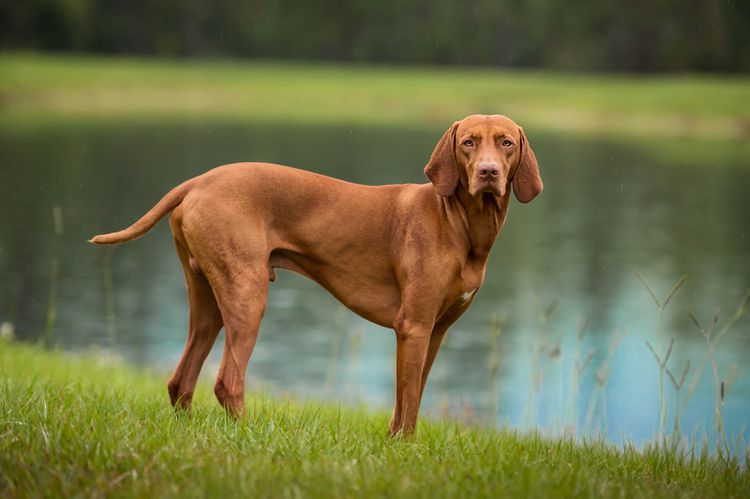
The Vizsla is a medium-sized dog with a long history originating in Hungary. This dog is muscular with a smooth, dense coat in shades of russet. Known for their pointing and retrieving skills, they were prized and versatile hunters, often mistaken for pointers or Weimaraners because they are both part of the sporting group and have physical similarities.
Today, the Vizsla has evolved as a popular, loving, beautiful, and active companion. Here’s what you should know about this breed before bringing one home.
GROUP: Sporting
HEIGHT: 22 to 24 inches (males); 21 to 23 inches (females)
WEIGHT: 55 to 60 pounds (male); 44 to 55 pounds (female)
COAT: Smooth, short, and dense
COAT COLOR: Varying shades of golden rust in color
LIFE SPAN: 12 to 14 years
TEMPERAMENT: Affectionate, loyal, gentle, energetic
HYPOALLERGENIC: No
ORIGIN: Hungary
Vizslas are exceptionally companionable and form strong bonds with their family members. In fact, they are so devoted that they are often referred to as “Velcro dogs” because they cling to their family. As outgoing pets, they can become attached to one person who looks after them the most, or they can bond with everyone in the family.
These dogs tend to be friendly with people and other dogs (and cats) in general and thrive in company. This means that they can be prone to developing separation anxiety if left on their own too much, and they are best suited to a household where they will have someone around most of the day.
The Vizsla has an ancient and noble heritage. It is believed that their origins can be traced as far back as the 8th century. It was during this time that the Magyar clans in Hungary were established and they needed dogs with stamina, speed, athleticism, and courage to aid them with their hunting. This is why they are often referred to as the Magyar or Hungarian Vizsla.
There are even stone etchings dating back to the 10th century that feature a Magyar tribesman, his falcon, and a dog that closely resembles a Vizsla.
As the centuries moved on, these dogs became prized possessions of Hungarian noblemen. They continued to refine the breed's hunting skills and temperament so that it more closely resembled the modern-day Vizsla that has won the hearts of many.
By the late 19th century, the population of Vizslas had dramatically declined, and they were on the verge of extinction. The dedication of breed enthusiasts meant the breed was able to escape this fate, and the demand for this dog has since continued to grow again.
The first Vizslas arrived in the United States in the mid-20th century. They gained recognition by the AKC in 1960, and continue to be a popular breed in North America and Europe.
The Vizsla is regarded as an adaptable, affectionate, and active breed. They are best suited to living in an active home that enjoys a consistent outdoor lifestyle that includes hiking, for example. They are very energetic and if they do not get enough daily exercise and stimulation, they can become easily bored and destructive in the home. In addition, they are known to be excellent chewers, so make sure you have lots of safe and interactive toys for them to engage with.
This breed excels in competitive sports and can make great agility dogs. Their hunting, pointing, and retrieval skills mean they also do well in scent work trials, and they are often great lovers of water.
Vizslas are known for their stamina and athleticism and love to run, so you will often see advice from owners that this breed needs hours every day running around outdoors. A quick walk around the block will not be enough. However, this type of energy makes them a popular choice if you enjoy the sport of Canicross (running with your dog).
Vizslas do not have a high maintenance grooming regime. They have a short coat that will only need brushing around once a week to lift out dead hair and keep the coat in good condition. They are not known for excessive shedding, either.
Vizslas are intelligent and eager to please. Making sure you give them enough mental stimulation is important to prevent problem behaviors from surfacing. They respond extremely well to positive methods of dog training. With the right guidance, they will pick up commands and training cues very quickly. And because they are happiest when working, you can even train them to be hunting dogs or emotional support dogs.
They are also quite a communicative breed and can be prone to alert barking, howling, and other vocalizations. You will need to make sure that you do not accidentally reinforce these behaviors, as they can then become a problem. Always reward your Vizsla for being quiet and ask for an alternative behavior to keep their barking under control.
Vizslas are known for being a generally healthy breed. They do have some health conditions that they can be more genetically predisposed towards.
Making sure you find a reputable breeder that performs health checks on prospective parents will help to reduce the risks, but some of the conditions they are known for include:
As with any dog, you should feed your Vizsla a high-quality and properly portion-controlled diet.
Vizslas, with their deep chests, are recognized as being more at risk from the life-threatening condition referred to as bloat. Therefore, it is best to feed them at least twice a day, rather than one large meal, as doing so can help to minimize the chance of bloat occurring. If they are prone to gulping their food down, encouraging them to eat more slowly from a slow feeder or interactive treat toy could also help.
If you buy from a breeder, expect a Vizsla to be quite inexpensive, with prices ranging from $500 up to $1,700.
Whatever puppy you are planning to bring home, you should do your research and find a good breeder. You should be able to see the puppies together with their mother in a nurturing home environment. They shouldn't be allowed to come home with you until they are at least 8 weeks old.
Before searching for a Vizsla, remember that the breed needs an owner willing to commit to intense playtime and attention every day. If you feel confident handling this breed, contacting the Vizsla Club of America could be a good place to start your research.
Don't rule out offering a Vizsla a forever home through adoption. This can be a rewarding experience. The Vizsla Club of America is involved directly in breed rescue. There are also other breed-specific rescues across the country to reach out to, including New Hope Vizsla Rescue. Don't forget to check for the breed at your local rescue shelter, too.
If you’re looking for an ultra-loving dog that will thoroughly enjoy doing things with you, the Vizsla could be the perfect choice. Just be prepared to devote enough time and energy towards their needs, including their training and exercise requirements, as these smart dogs need plenty of mental and physical stimulation.
If you are interested in dogs similar to the Vizsla, you could also consider the following breeds:
There are lots of wonderful dog breeds out there. By doing your research, you will find one that will be best suited to having a forever home with you.
Vizslas are affectionate towards their owners and can make wonderful family pets. Just keep in mind that this breed needs a lot of time and attention, so a busy family with children might not be able to give their dog what they need daily. Also, these dogs love to play and are gentle with kids, but it’s always best to supervise small children around your dog to ensure they don’t accidentally get hurt by their high-energy pet.
The Vizsla is not considered to be a rare breed. However, the closely related wirehaired Vizsla breed, with shaggy facial hair and eyebrows, is indeed a rare find, and is also not as popular as the short hair Vizsla breed.
You may find lots of contradictory information about whether or not a Vizsla is a good apartment dog. The bottom line: if you have access to a park or good outdoor area and can give your Vizsla adequate time and attention, then any size apartment will be fine for this medium-size breed. However, this breed tends to be very vocal and barky, which many apartment-dwelling neighbors may not appreciate so much.

Swollen Lymph Nodes in Dogs
Dogs' lymph node glands may become enlarged due to infection or disease. Learn the causes, treatment, and prevention.
What Is Spaying? All About the Procedure in Dogs
What is a spay? Should you have your dog spayed? Learn what it means to spay a dog, a procedure also known as an ovariohysterectomy.
Can Dogs Eat Popsicles?
You might be wondering can dogs eat popsicles? Certain types of frozen treats are safe for your dog, but you need to be aware of ingredients and allergies
Can Dogs Drink Milk?
Dogs can have milk, providing they are not lactose intolerant. It should really only be given in small quantities though
Can My Dog Eat Tomatoes?
You'll want to keep Fido out of your garden since the tomato plant is toxic, but you can safely offer him ripe tomatoes as a nutrient-packed treat.
Can Dogs Taste Spicy Flavors?
While dogs and humans experience some flavors differently, dogs do taste spicy flavors and in some cases, this can be harmful for them.
Should You Allow Your Indoor Cat to Go Outside?
Here are pros, cons, and safety considerations for allowing indoor cats to explore outdoors and the indoor vs outdoor cats debate, plus safety tips.
Can My Spayed Cat Still Be in Heat?
If your cat was spayed but appears to be in heat, the condition may be caused by several factors. Learn about them here.
How to Keep Cats Cool in Summer
Summertime means heat and with increased temperatures, you have an increased risk of heatstroke in cats. Find out how to prevent heatstroke and keep your cat cool in the summer.
Taurine for Cats
Taurine is an essential animal protein in your cat's diet. Learn more about the various ways it supports your feline's body.
Why Is My Cat Always Hungry and Meowing?
A cat can act like it is always hungry, and there may be a medical reason for this. Learn what behavior is normal and when to see your veterinarian.
Elf Cat: Breed Profile, Characteristics & Care
Elf cats are a new, rare cross between a sphynx and American curl with curly ears and a playful personality.
Maine Coon Cat: Breed Profile, Characteristics & Care
The Maine Coon cat is of the largest cat breeds in the world. These amiable, gentle cats make great companions. Learn about the Maine Coon cat breed's appearance, temperament, health, and care needs.
Calico Cat: Breed Profile, Characteristics & Care
Calico cats boast unique tri-color coats, and they are famous for being both spunky and sweet. Learn about the calico cat color pattern.
Bombay: Cat Breed Profile, Characteristics & Care
The Bombay cat, a mix of the Burmese and the American shorthair, features an all-black coat, a stocky build, and a friendly demeanor.
Barbet: Dog Breed Characteristics & Care
Learn about the barbet dog, a French hunting breed that's tough to find in the United States. It's known for its curly coat and calm demeanor.
Bichon Frise: Dog Breed Characteristics & Care
The bichon frise is a fluffy little white dog with a joyful personality. Learn more about its appearance, personality, history, care, and more.
Australian Kelpie: Dog Breed Characteristics & Care
The Australian kelpie is an intelligent, high-energy dog breed developed for herding. Learn about the Australian kelpie, including temperament, appearance, history, and care needs.
How to Teach Your Dog to Play Dead in 4 Steps
Playing dead is a fun dog trick that most dogs can pick up pretty quickly. Learn simple steps to teach your dog to play dead when you say "bang."
Different Meanings of a Dog's Wagging Tail
A dog wagging his tail is a common sight, but it may mean more than you think. Find out why dogs wag their tails and what canine tail wagging means.


:strip_icc()/Stocksy_txp06a920b9Dpc200_Medium_2584845-3bb645106de14e98b83acec86a679065.jpg)