- 01 of 09
Leaves
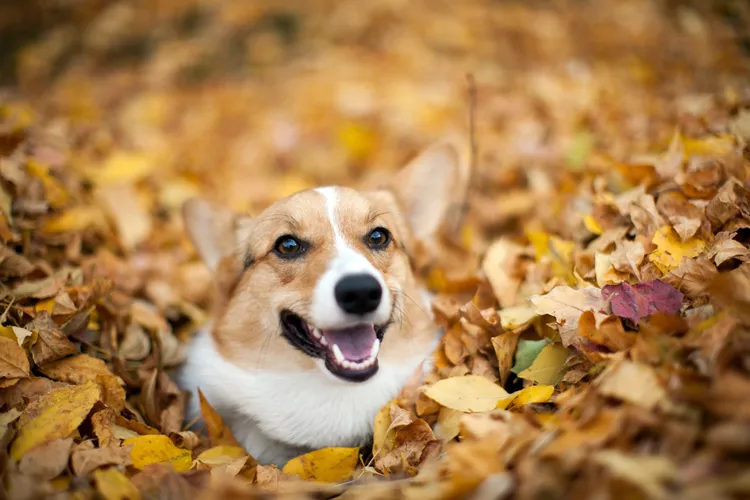
The main thing to be concerned about with leaves and leaf piles is mold growth. While leaves from most trees are not a big deal by themselves, leaves that develop mold can cause severe neurological issues in dogs when consumed.
Fall conditions can make it easy for mold to develop on a pile of decaying leaves. When that mold forms, it can produce tremorgenic mycotoxins, which are very toxic to dogs and can cause neurological issues such as body tremors and seizures if ingested.
Dogs who ingest moldy leaves typically start showing signs of poisoning within a few hours. These cases often require a visit to the vet because the poisoning is typically treated with injectable and prescription medications, according to Schmid.
If a dog consumes leaves that are not moldy, they will be fine in most cases, aside from some minor stomach upset. They can also risk developing an obstruction if they eat a large quantity of leaves and have trouble passing them.
- 02 of 09
Acorns
In addition to being a choking hazard, acorns can be toxic to dogs, resulting in vomiting, diarrhea, and stomach pain if ingested. In small dogs, they can also cause gastrointestinal obstructions. The severity of acorn poisoning depends on the dog and the quantity of acorns they ingest.
“If it’s a large dog and they ingested a couple of acorns, then they can usually pass them on their own and can just stay home unless they have numerous episodes of vomiting or a lot of loose stool or refusing to eat,” Schmid says. “If it’s a small dog, like maybe a Chihuahua or a Yorkie, and for some reason they actually swallowed a full acorn, then they should definitely go into the clinic.”
- 03 of 09
Walnuts
Walnuts on their own are generally fine, but similar to leaves, they become a problem when they develop mold. Walnuts have a high moisture content and are especially susceptible to mold growth, which can cause neurological problems when ingested.
Your best bet is to keep an eye out for walnuts in your yard and remove them before mold has a chance to develop.
Black walnuts, a specific variety of walnut native to Northeastern United States and Canada, are toxic to dogs and should be kept away from them.
If your dog ingests a black walnut or a moldy walnut, you should consult a veterinarian or pet poisoning hotline.
- 04 of 09
Mushrooms
Mushrooms are a challenge because there are many different varieties. While most mushrooms that people can eat are safe for dogs, many wild mushrooms growing outside are poisonous.
Schmid organizes wild mushrooms into four categories:
- Mushrooms that cause stomach upset, such as vomiting and decrease in appetite
- Mushrooms that cause liver failure
- Mushrooms that cause hallucinations
- Mushrooms that cause seizures and other neurological issues
If your dog ingests a wild mushroom of an unknown species, you should consult your veterinarian. If possible, take several photos of the mushroom from different angles. Species can be difficult to identify and may need to be examined by a specialist.
Continue to 5 of 9 below - 05 of 09
Apples and Crabapples
In apples and crabapples, the seeds contain cyanide and can be toxic. However, dogs would have to consume a large amount of apples and break open the seeds to experience any major poisoning.
“The good news is that most of the time with apples, the animal maybe eats an apple or a few apples, not a large number. And a lot of times those seeds, they’re not broken open when they’re biting them or chewing them,” Schmid says.
If your dog has eaten an apple or two from outside, you can probably just monitor them for any unusual symptoms. If they have consumed a large quantity or are displaying any symptoms of poisoning, such as vomiting, you should consult a veterinarian or pet poison hotline.
- 06 of 09
Pumpkins
Pumpkin is generally safe for dogs. In fact, veterinarians often recommended adding pureed pumpkin to a dog’s diet for added fiber and vitamins.
While a decorative pumpkin on the porch or a pumpkin on a vine in the garden isn’t exactly pureed, it likely will not cause much harm if ingested. Same goes for carved jack-o-lanterns as long as they’re not moldy and the dog does not consume the candle. Candles can cause blockages, and mold can cause neurological issues, so contact your vet if your dog ingests a moldy pumpkin or a candle.
- 07 of 09
Gourds
Similar to pumpkins, gourds will likely not cause any major issues for dogs. However, if your dog consumes a large amount or swallows large pieces whole, it could cause a blockage. Small amounts may result in stomach upset.
- 08 of 09
Mums
In most cases, consuming mums will result in minor symptoms such as vomiting, loose stool, and lack of appetite.
“It’s not usually going to be a big concern if they were to ingest several of the leaves or the flowers themselves,” Schmid says. “Most of these things, fortunately, are not going to be a huge issue this time of year.”
Continue to 9 of 9 below - 09 of 09
Rat Poison
During the fall, many families are setting up mouse traps or bait stations as the weather gets colder and small rodents are looking to find their way inside. Rat poison can be very harmful if consumed by a dog.
If you do plan to use rodenticide this fall, it can be helpful to keep the packaging or to take a photo of it. Different active ingredients in rodenticides can cause different issues, so if your dog gets into a product, knowing the active ingredient can help a veterinarian diagnose and treat them.
To prevent your dog from getting into anything, keep the poison in a bait station, and keep it out of your dog’s reach or in an area they cannot access.
When it comes to the seasons changing, the outdoors are full of items that can intrigue and potentially harm your dog, so prevention is your best bet to protect them. Clean up fallen leaves, fruits, and nuts quickly before they have a chance to get moldy, and keep outdoor decorations out of reach.
The first sign of poisoning is often vomiting, so if you notice your dog vomiting or otherwise acting strangely after spending time outdoors, monitor their behavior and consult a veterinarian or pet poison hotline.