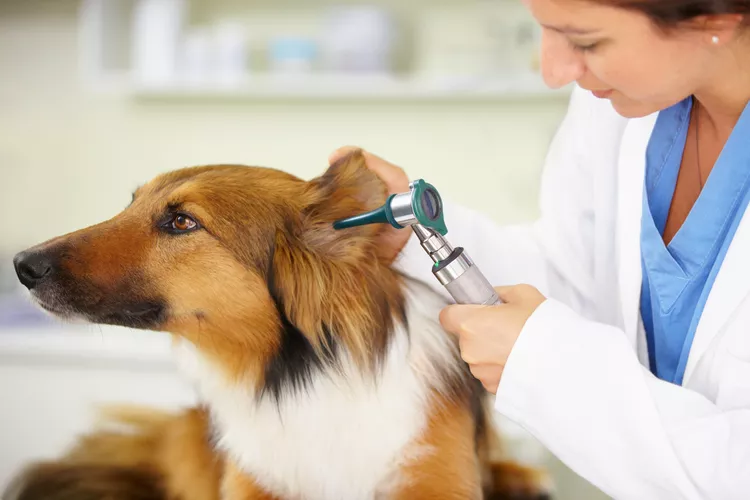
Ear infections in dogs can cause severe itching and pain, and they require veterinary treatment. Symptoms are usually noticeable early in an infection, including ear redness, and dogs with itchy or painful ears will often shake their heads or scratch their ears. Infections may arise from bacterial or fungal overgrowth due to several precipitating factors, and identifying the cause is necessary for effective treatment. Dogs with floppy ears are particularly prone to infection.
Ear infections are inflammatory reactions to bacterial or fungal (yeast) overgrowth in a dog's inner or outer ear canal. They can occur only in the outer portion of the ear but will progress and inflame the inner portions of the ear if left untreated. The deeper the infection, the harder it is to treat and the more serious damage it can inflict.
Ear infections can be extremely painful for dogs. If your dog is displaying any physical or behavioral changes that may indicate pain or discomfort, especially in or around the ears, pay a visit to your vet right away.
Numerous symptoms can signify an ear infection in your dog, many of which are readily observable. Head shaking, scratching, and rubbing are telltale signs, but you may also see your dog tilting its head, holding one ear down, and being reluctant to have its head or ears touched.
Sometimes the ear infection will cause a foul odor and create ear discharge. Occasionally, hair loss or blood will be seen from constant scratching and rubbing on the ear. Ear hematomas may form on the outside of the ear from the trauma. If the infection has progressed into the middle or inner ear, then hearing loss, abnormal eye movements, and a loss of balance can occur.
There are several causes of ear infections in dogs. Understanding the factors contributing to the infection will help you prevent future pain and discomfort for your dog.
Ear mites are tiny, incredibly itchy parasites that can live in a dog's ear canal. An ear mite infestation may lead to ear infections due to the environment in the canal created by the parasite. The symptoms of ear mites are almost identical to those of an ear infection, even if the mites haven't caused a secondary infection. If you suspect your dog has either condition, pay a visit to your vet right away.
Dogs that have allergies may be particularly susceptible to ear infections. Food allergies and environmental allergies, especially skin irritants like pollen or dust, can cause secondary, recurring ear infections.
Moisture in a dog's ear creates an ideal environment for bacteria and yeast to grow. If the moisture itself doesn't cause an ear infection, the bacteria in the water can.
Hair around a dog's ear can transport moisture or bacteria that can cause ear infections. Hair can also carry parasites and irritants that can enter and infect the ear canal.
Ear tumors or growths, benign or not, can lead to ear infections. Polyps can form in clogged wax-producing glands and cover the ear opening, impeding proper bacterial and yeast regulation and causing infection.
Basset hounds, Chinese Shar-Peis, Labradoodles, beagles, and golden retrievers are especially susceptible to ear infections because their ear flaps reduce airflow to the outer ear canal.
To diagnose an ear infection, your veterinarian will begin with a physical examination of the ear. Your vet will use an otoscope to look inside your dog's ear and then may swab the ear canal to obtain and test a bacterial sample. The vet will look for any abnormalities in the canal through the otoscope, like swelling, discharge, growths, and redness. A biopsy may be performed in severe cases or if your vet finds a growth that carries a risk of malignancy.
Ear infections in dogs are usually treated with topical medications in the form of ear drops or ointment. However, if the affected ears are very painful, your vet may prescribe oral medications for pain and inflammation.
Before applying topical medications to the ear, the ear must be clean. Your vet may prescribe a medicated ear cleaner or recommend an over-the-counter solution. Once the ear is properly cleaned, the topical medication can be applied and gently massaged into the ear canal. If the ear is extremely dirty or painful, your dog may need to be sedated or anesthetized and have its ear cleaned by a vet.
While uncommon, if a dog has developed severe chronic inflammation and medications are no longer effective, surgery may be needed to remove the ear canal. This procedure is called a total ear canal ablation (TECA). TECA surgery may also be recommended if tumors or polyps are present in the ear canal.
Swift ear infection treatment is essential to the health and wellbeing of your dog. Ear infections are prevalent but nearly all cases are easily treatable with topical medications. Typically, within a few days, your dog will begin to feel better. After one to two weeks, the infection will be resolved.
Some ear infections are challenging to treat and can be resistant to medication. Additionally, if an ear infection is left untreated for a prolonged period, it can cause severe inflammation, permanent damage to the eardrum, and impact your dog's hearing.
There are a few easy ways to help prevent your dog from developing an ear infection. Cleaning and drying your dog's ears after a bath or a swim is one of the best preventive measures you can take. Additionally, if your dog has a lot of hair in and around its ear opening, clipping or plucking excess hair can reduce some heat and moisture in the ear that can contribute to an ear infection.
If your vet suspects that an allergy causes your dog's ear infection, you will need to regulate allergens through diet changes or limiting exposure to irritants. If a growth has formed in or around the ear canal, removing it can help prevent future infections.
Ear infections are not usually contagious to other animals, but there are exceptions. If the ear infection results from an ear mite infestation, another dog or cat can easily contract these parasites and develop a secondary ear infection. Additionally, if the type of bacteria in the ear infection is methicillin-resistant Staphylococcus pseudintermedius (MRSP), it is spreadable to other animals.
Ear infections in dogs are not usually contagious to humans. Still, if the infection is due to methicillin-resistant Staphylococcus pseudintermedius (MRSP), it could be spread to humans. This is rare, especially in non-immunocompromised people.

Swollen Lymph Nodes in Dogs
Dogs' lymph node glands may become enlarged due to infection or disease. Learn the causes, treatment, and prevention.
What Is Spaying? All About the Procedure in Dogs
What is a spay? Should you have your dog spayed? Learn what it means to spay a dog, a procedure also known as an ovariohysterectomy.
Can Dogs Eat Popsicles?
You might be wondering can dogs eat popsicles? Certain types of frozen treats are safe for your dog, but you need to be aware of ingredients and allergies
Can Dogs Drink Milk?
Dogs can have milk, providing they are not lactose intolerant. It should really only be given in small quantities though
Can My Dog Eat Tomatoes?
You'll want to keep Fido out of your garden since the tomato plant is toxic, but you can safely offer him ripe tomatoes as a nutrient-packed treat.
Can Dogs Taste Spicy Flavors?
While dogs and humans experience some flavors differently, dogs do taste spicy flavors and in some cases, this can be harmful for them.
Should You Allow Your Indoor Cat to Go Outside?
Here are pros, cons, and safety considerations for allowing indoor cats to explore outdoors and the indoor vs outdoor cats debate, plus safety tips.
Can My Spayed Cat Still Be in Heat?
If your cat was spayed but appears to be in heat, the condition may be caused by several factors. Learn about them here.
How to Keep Cats Cool in Summer
Summertime means heat and with increased temperatures, you have an increased risk of heatstroke in cats. Find out how to prevent heatstroke and keep your cat cool in the summer.
Taurine for Cats
Taurine is an essential animal protein in your cat's diet. Learn more about the various ways it supports your feline's body.
Why Is My Cat Always Hungry and Meowing?
A cat can act like it is always hungry, and there may be a medical reason for this. Learn what behavior is normal and when to see your veterinarian.
Elf Cat: Breed Profile, Characteristics & Care
Elf cats are a new, rare cross between a sphynx and American curl with curly ears and a playful personality.
Maine Coon Cat: Breed Profile, Characteristics & Care
The Maine Coon cat is of the largest cat breeds in the world. These amiable, gentle cats make great companions. Learn about the Maine Coon cat breed's appearance, temperament, health, and care needs.
Calico Cat: Breed Profile, Characteristics & Care
Calico cats boast unique tri-color coats, and they are famous for being both spunky and sweet. Learn about the calico cat color pattern.
Bombay: Cat Breed Profile, Characteristics & Care
The Bombay cat, a mix of the Burmese and the American shorthair, features an all-black coat, a stocky build, and a friendly demeanor.
Barbet: Dog Breed Characteristics & Care
Learn about the barbet dog, a French hunting breed that's tough to find in the United States. It's known for its curly coat and calm demeanor.
Bichon Frise: Dog Breed Characteristics & Care
The bichon frise is a fluffy little white dog with a joyful personality. Learn more about its appearance, personality, history, care, and more.
Australian Kelpie: Dog Breed Characteristics & Care
The Australian kelpie is an intelligent, high-energy dog breed developed for herding. Learn about the Australian kelpie, including temperament, appearance, history, and care needs.
How to Teach Your Dog to Play Dead in 4 Steps
Playing dead is a fun dog trick that most dogs can pick up pretty quickly. Learn simple steps to teach your dog to play dead when you say "bang."
Different Meanings of a Dog's Wagging Tail
A dog wagging his tail is a common sight, but it may mean more than you think. Find out why dogs wag their tails and what canine tail wagging means.


