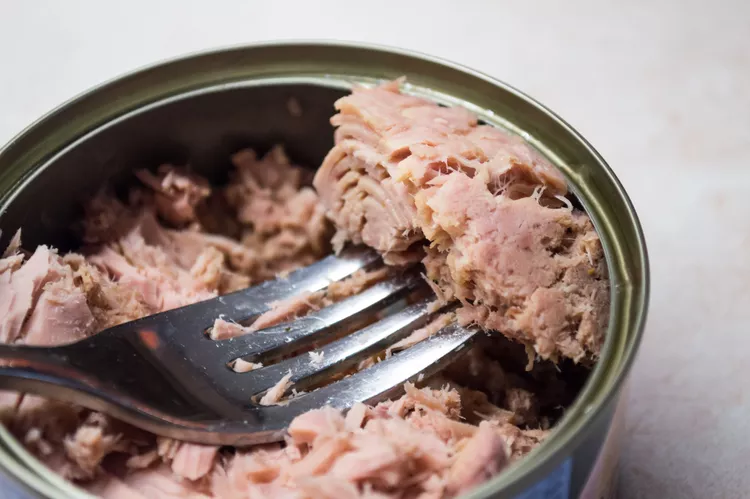
Tuna—especially the canned variety—is a staple product in most homes, providing the perfect quick and healthy protein for snacks and meals. But is tuna good for your dog too?
Yes, dogs can eat tuna—but only in moderation. While tuna is a common ingredient in dog food, its high mercury content may be harmful to pups in large amounts, so it's better to give less than more.
Tuna is a saltwater fish that’s packed with protein, selenium, magnesium, and potassium, as well as vitamins B3, B6, and B12. It’s also chock-full of omega-3 fatty acids. All of these things make it a fantastic part of a healthy human diet, and can also benefit dogs too.
When fed in moderation, tuna fish can help support your pup’s joints and immune system. It can also serve to help them maintain a healthy amount of energy. As for those omega-3s, they’re great for making your dog’s coat thick and shiny, and may even be able to reduce bodily inflammation.
However, too much of a good thing can backfire, which is why it’s smart to be aware of the risks that tuna fish can pose as well.
So long as your dog doesn’t display an aversion or any other sort of negative reaction to tuna fish, a little bit here or there is very unlikely to do any harm.
Where things start to get complicated is if you’re feeding your dog too much tuna, since some varieties—particularly albacore—are quite high in mercury. This heavy metal can be poisonous when consumed in large amounts.
While, like people, dogs aren’t going to be poisoned from a small amount of mercury consumption, their overall tolerance is likely a lot lower than humans, which means they’ll reach their limit sooner than we would.
The signs of mercury poisoning that you should be aware of include hair loss, vision problems, loss of coordination, and tremors. If your dog is exhibiting any of these signs, call or visit your vet immediately.
To be safe, keep your dog’s consumption of tuna to a minimum and feed it only as an occasional treat.
There are a variety of different ways to enjoy tuna — but are all of them created equally when it comes to what is and isn’t safe for your dog to consume? Here’s what to know.
Canned tuna is probably the type that your dog is most likely to be eating since it’s what most of us have in our homes. To keep it as safe as possible, only feed your dog canned tuna that’s packed in water and not oil, and that doesn’t have any added salt. Albacore tuna will be fine in low amounts, but low-mercury picks like yellowfin are an even better way to go.
A bit of tuna filet will be fine for your dog so long as it’s not cooked in butter or heavy oil and doesn’t include any seasonings beyond some light salt. If you do feed it, make sure to flake some meat off instead of providing your pup with an entire filet, especially if there are bones.
If you are cooking your tuna with sauteed onion or garlic, don't offer any to your pooch as both these ingredients are toxic for dogs.
Raw fish can harbor dangerous intestinal parasites so, to be on the safe side, it’s best to avoid feeding it to your dog. This goes double if it’s raw tuna off of a sushi roll, since it may have additional ingredients that your furry friend shouldn’t be eating, such as soy sauce, wasabi, or uni sauce.
Last but not least are tuna fish sandwiches, which are a de facto no-go for Fido. Most tuna salad is made with mayonnaise, which is high in fat and difficult for your dog to digest. And other common ingredients, such as onions, are downright dangerous for them.
If you’re making tuna fish sandwiches fresh at home, give your dog a taste of tuna prior to adding in other ingredients.
If your dog loves tuna, you can feel fine about giving them small amounts here and there. And since it’s a rare treat, here are some ways you might want to feed it to make it extra special:
Give a boost of protein to your dog’s dinner by flaking some canned or cooked tuna on top of their normal food.
The name might not be so palatable, but the end product is. Combine one tin of tuna packed in water (undrained) with ¾ cup of whole wheat flour, ½ teaspoon turmeric, 1 egg, and ¼ cup of parmesan cheese. Spread out onto a parchment paper lined baking sheet and bake at 350 degrees Fahrenheit for 20 minutes. Allow to cool, then cut into bite-sized pieces. Store in the freezer for a yummy grab-and-go treat.
The verdict: feel free to share some plain tuna fish with your dog, but keep it as a limited treat, instead of a regular indulgence.

Swollen Lymph Nodes in Dogs
Dogs' lymph node glands may become enlarged due to infection or disease. Learn the causes, treatment, and prevention.
What Is Spaying? All About the Procedure in Dogs
What is a spay? Should you have your dog spayed? Learn what it means to spay a dog, a procedure also known as an ovariohysterectomy.
Can Dogs Eat Popsicles?
You might be wondering can dogs eat popsicles? Certain types of frozen treats are safe for your dog, but you need to be aware of ingredients and allergies
Can Dogs Drink Milk?
Dogs can have milk, providing they are not lactose intolerant. It should really only be given in small quantities though
Can My Dog Eat Tomatoes?
You'll want to keep Fido out of your garden since the tomato plant is toxic, but you can safely offer him ripe tomatoes as a nutrient-packed treat.
Can Dogs Taste Spicy Flavors?
While dogs and humans experience some flavors differently, dogs do taste spicy flavors and in some cases, this can be harmful for them.
Should You Allow Your Indoor Cat to Go Outside?
Here are pros, cons, and safety considerations for allowing indoor cats to explore outdoors and the indoor vs outdoor cats debate, plus safety tips.
Can My Spayed Cat Still Be in Heat?
If your cat was spayed but appears to be in heat, the condition may be caused by several factors. Learn about them here.
How to Keep Cats Cool in Summer
Summertime means heat and with increased temperatures, you have an increased risk of heatstroke in cats. Find out how to prevent heatstroke and keep your cat cool in the summer.
Taurine for Cats
Taurine is an essential animal protein in your cat's diet. Learn more about the various ways it supports your feline's body.
Why Is My Cat Always Hungry and Meowing?
A cat can act like it is always hungry, and there may be a medical reason for this. Learn what behavior is normal and when to see your veterinarian.
Elf Cat: Breed Profile, Characteristics & Care
Elf cats are a new, rare cross between a sphynx and American curl with curly ears and a playful personality.
Maine Coon Cat: Breed Profile, Characteristics & Care
The Maine Coon cat is of the largest cat breeds in the world. These amiable, gentle cats make great companions. Learn about the Maine Coon cat breed's appearance, temperament, health, and care needs.
Calico Cat: Breed Profile, Characteristics & Care
Calico cats boast unique tri-color coats, and they are famous for being both spunky and sweet. Learn about the calico cat color pattern.
Bombay: Cat Breed Profile, Characteristics & Care
The Bombay cat, a mix of the Burmese and the American shorthair, features an all-black coat, a stocky build, and a friendly demeanor.
Barbet: Dog Breed Characteristics & Care
Learn about the barbet dog, a French hunting breed that's tough to find in the United States. It's known for its curly coat and calm demeanor.
Bichon Frise: Dog Breed Characteristics & Care
The bichon frise is a fluffy little white dog with a joyful personality. Learn more about its appearance, personality, history, care, and more.
Australian Kelpie: Dog Breed Characteristics & Care
The Australian kelpie is an intelligent, high-energy dog breed developed for herding. Learn about the Australian kelpie, including temperament, appearance, history, and care needs.
How to Teach Your Dog to Play Dead in 4 Steps
Playing dead is a fun dog trick that most dogs can pick up pretty quickly. Learn simple steps to teach your dog to play dead when you say "bang."
Different Meanings of a Dog's Wagging Tail
A dog wagging his tail is a common sight, but it may mean more than you think. Find out why dogs wag their tails and what canine tail wagging means.


